Antibody Education

3D brain cell culture models are reshaping how researchers study neurological disorders and evaluate new therapeutic candidates. Unlike traditional two-dimensional systems, organoids and spheroids offer a more realistic window into disease mechanisms and drug responses. As adoption grows, these models are quickly becoming essential tools for labs focused on translational neuroscience and high-throughput screening.
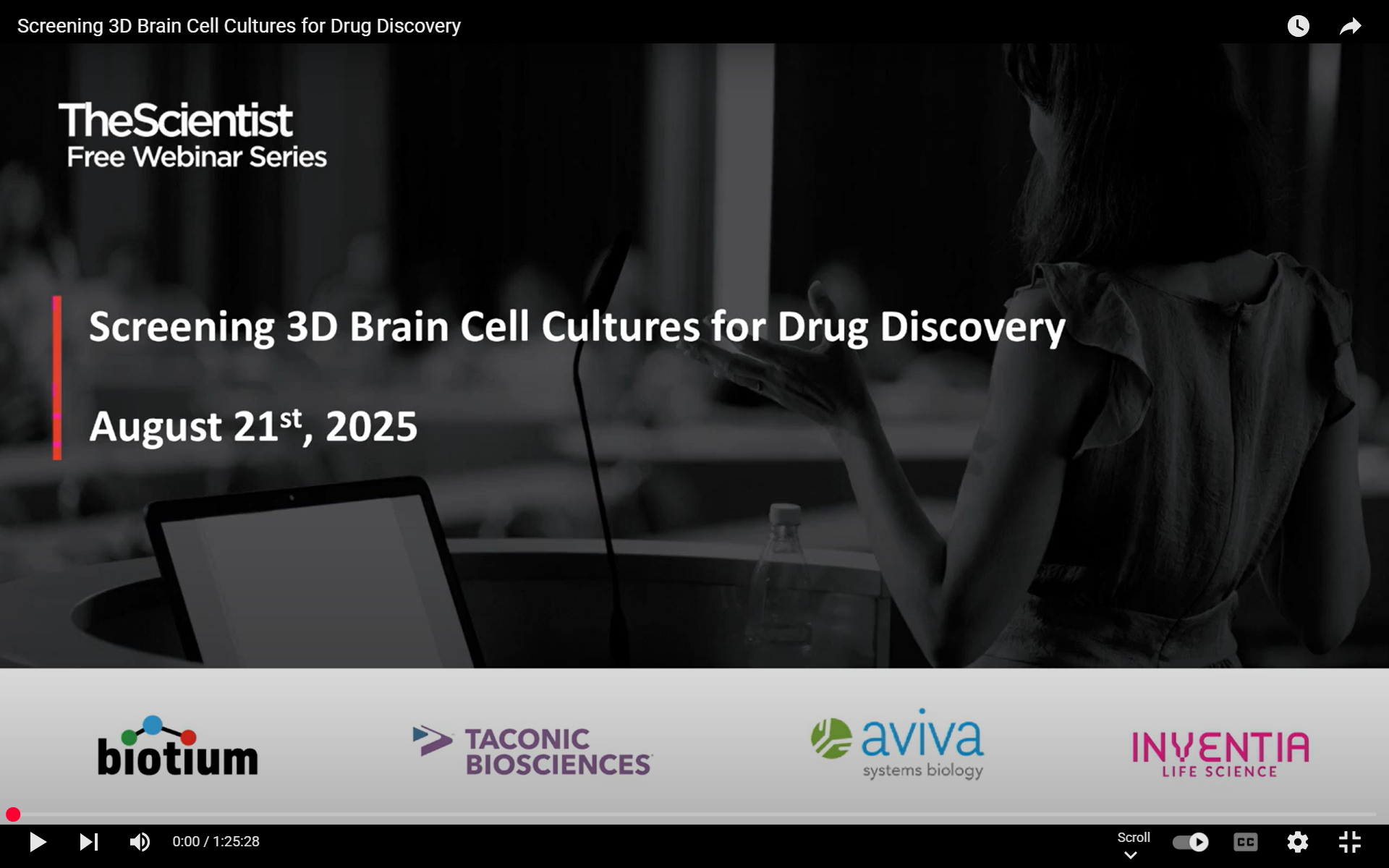
In a webinar hosted by The Scientist and sponsored by Aviva, Cathryn Haigh, PhD and Lena Smirnova, PhD share how cutting-edge 3D systems are driving new insights into complex neurobiology. Their work highlights the strengths of these models for building better assays and investigate complex neurobiological processes.
What You’ll Learn
Together, these talks illustrate a growing shift in neuroscience toward models that better mirror human biology and accelerate discovery.
Watch the full webinar on YouTube to explore the research in depth.
👉 Screening 3D Brain Cell Cultures for Drug Discovery