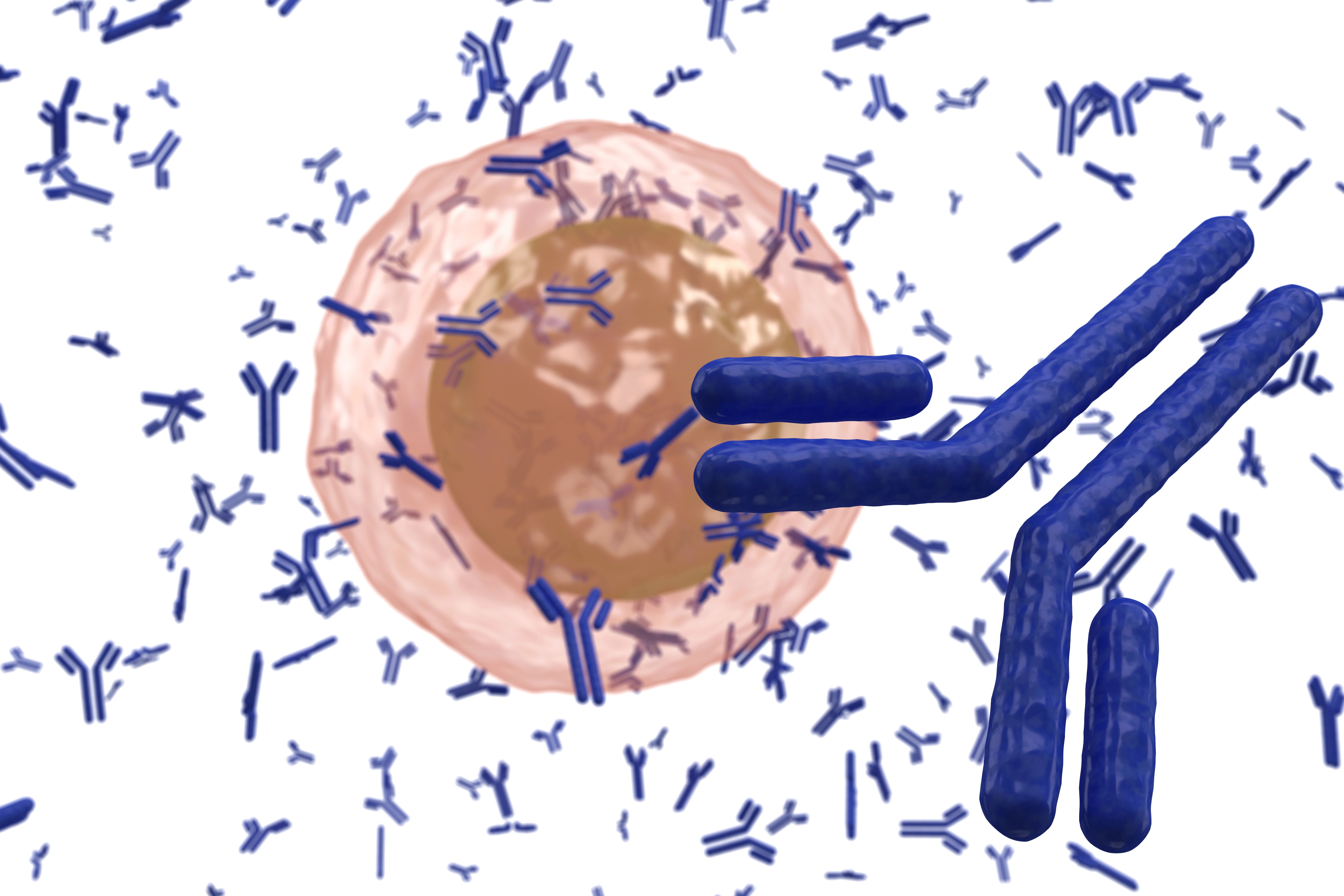
The immune system is a powerful biological marvel, existing in a delicate balance of activation and inhibition. Hundreds of diverse cytokines facilitate communication between immune cells to initiate, sustain, and eventually terminate immunological responses. Even the slightest modification to normal cytokine function can compromise immune regulation, placing organisms at risk of disease.
Among these key cytokines is tumor necrosis factor (TNF), a messenger secreted by macrophages, T-cells, and natural killer cells. As its name suggests, TNF was first identified through its role in driving hemorrhage and necrosis in tumors but is now known as a vital player in autoimmune, infectious, and neuroinflammatory diseases.[i] Because of this protein’s multifaceted impact on normal immune function as well as a range of diseases, TNF research is poised to make a broad impact.
Sounding the Alarm for Inflammation
TNF, also known as TNF-𝛂, is central to orchestrating inflammation, cellular defense, and tissue repair. Under normal conditions, TNF helps coordinate immune cell communication, driving rapid response to infection or injury and promoting the clearance of pathogens. But it doesn’t just serve to shift immune cells into gear—TNF acts as both a messenger and a modulator, ensuring that inflammation occurs when needed and resolves when the threat subsides. In short, TNF is at the crux of immune balance, enabling the body to react decisively to foreign agents while stopping short of self-damage.
However, TNF’s powerful ability to signal immune activation is a double-edged sword. Excessive or uncontrolled TNF activity can trigger a cascade of chronic inflammation, fueling autoimmune disorders such as rheumatoid arthritis, psoriasis, and inflammatory bowel disease. In the central nervous system, dysregulated TNF signaling potentiates neuroinflammation and neuronal excitotoxicity, contributing to pathological mechanisms of multiple sclerosis, neurodegenerative diseases like Parkinson’s disease, and other conditions.[ii]
Conversely, inadequate TNF responses can compromise certain immune processes, leaving the host vulnerable to certain infections. For example, a 2024 study published in Nature by Arias et al. explored the mechanisms of increased susceptibility to recurrent tuberculosis in individuals with inherited TNF deficiency. Their research demonstrated that TNF expression is required for the normal production of reactive oxidative species by macrophages, an immune process known as respiratory burst.[iii] TNF deficiency compromised respiratory burst-dependent immunity to Mycobacterium tuberculosis in macrophages. Interestingly, however, the patients exhibited otherwise normal clinical symptoms and biological inflammatory responses to other infectious agents.
Advancing TNF Research
Unraveling the delicate equilibrium between protection and pathology, as well as the precise role of TNF in both normal and pathological immune processes, is a rich area for future research. Precision assays enabling the detection and quantification of TNF and other immunological biomarkers are vital for understanding immune function in health and disease and for exploring potential therapeutic avenues, such as TNF inhibitors.
Aviva Systems Biology aims to support the advancement of clinically applicable inflammatory research with high-quality, highly sensitive antibody reagents and assays. Our catalog offerings include our cited polyclonal polyclonal TNF antibody, high-sensitivity recombinant monoclonal and TNF ELISA kits for human, rat, rabbit, and bovine samples.
Using our recombinant antibody workflow, Aviva can also engineer custom high-performing, consistent, and highly specific antibodies for research, discovery, and diagnostic applications. Whether you’re exploring mechanisms of neuroinflammation or assessing the impact of TNF-inhibiting therapies, we aim to empower researchers with the right tools to fuel progress.
Contact Aviva today for support with TNF assay development or custom antibody production.
[1] Chédotal, H., Narayanan, D., Povlsen, K., et al. (2023). Small-molecule modulators of tumor necrosis factor signaling. Drug discovery today, 28(6), 103575.
[2] Gonzalez Caldito, N. (2023). Role of tumor necrosis factor-alpha in the central nervous system: a focus on autoimmune disorders. Frontiers in Immunology, 14, 1213448.
[3] Arias, Andrés A et al. “Tuberculosis in otherwise healthy adults with inherited TNF deficiency.” Nature vol. 633,8029 (2024): 417-425. doi:10.1038/s41586-024-07866-3