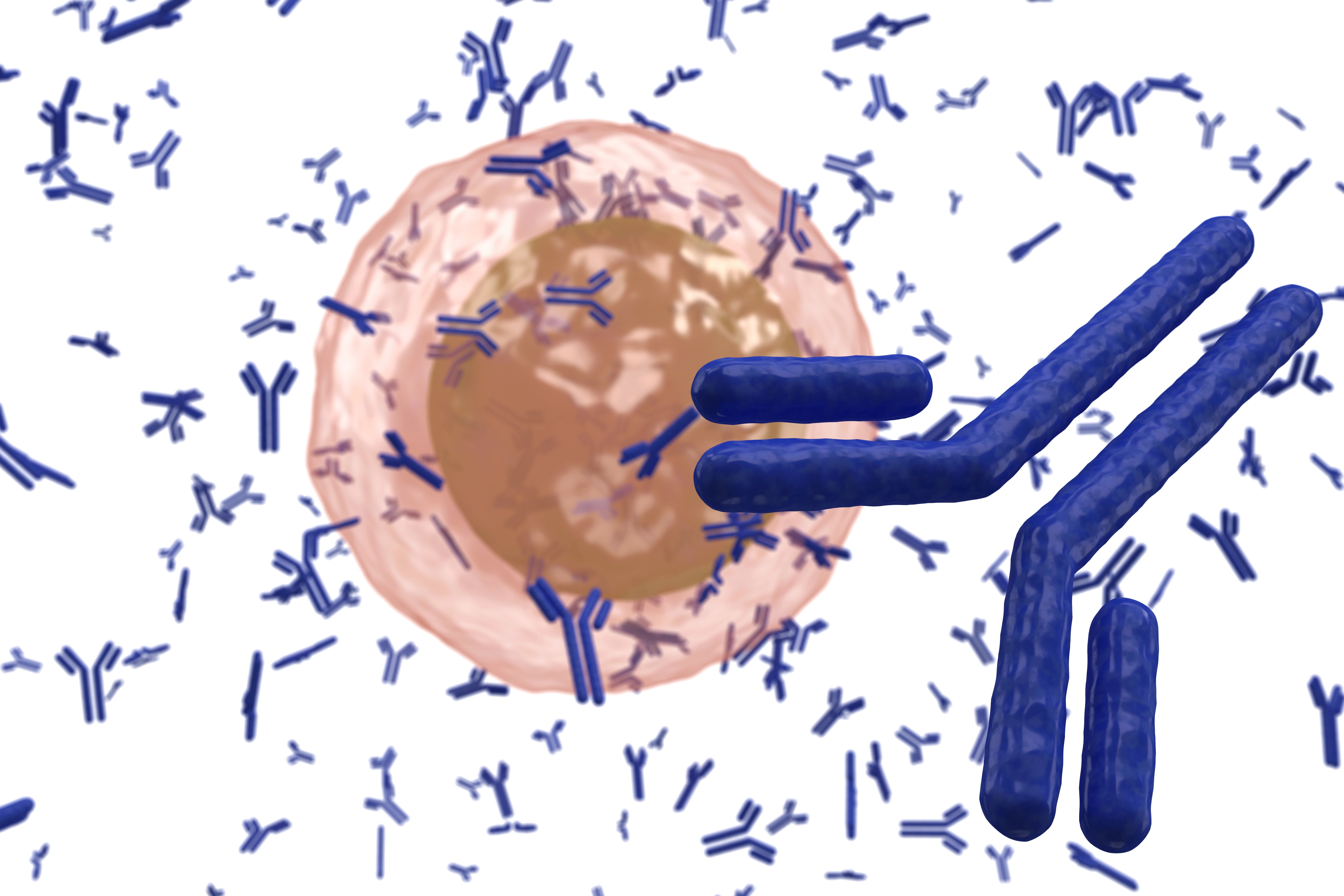
Specificity, sample complexity, and assay design all shape whether oncology data holds up
Cancer research is full of important proteins. It is not full of easy ones.
On paper, biomarker measurement can sound straightforward. Pick a target. Find an antibody. Run the assay. Measure the signal.
In practice, cancer biology rarely behaves that cleanly.
The same protein may be expressed differently across tumor types, across patients, across regions of the same tumor, and across time in response to treatment. Some targets are low abundance. Some are heavily modified. Some sit in pathways where closely related proteins or isoforms make specificity harder than expected. Some look simple in buffer and much less cooperative in real samples.
That gap between theory and performance is where oncology workflows often get more complicated than planned.
A biologically important protein is not automatically an easy measurement target. In cancer research, confidence depends on understanding both the biology and the conditions under which that biology is being measured.
The biology is already complex
Tumors are not one uniform system. Different cell populations can contribute different signals. The tumor microenvironment adds immune cells, stromal cells, and extracellular components that complicate interpretation. Treatment can further shift pathway activity and protein abundance over time.
That means the practical question is not just, “Is this biomarker important?”
It becomes: What exactly are we measuring, under what conditions, and how confident are we that the signal reflects the biology we care about?
That is a much harder question, but an especially more useful one.
Specificity is not a simple checkbox
In many workflows, specificity is often treated as a baseline requirement that can be confirmed once and then forgotten. In reality, it is an ongoing performance question.
Does the reagent distinguish the intended target from close homologs? Does it recognize the right epitope in the relevant assay format? Does it still behave well in lysate, tissue, plasma, or serum? If the question depends on a mutation, isoform, or post-translational modification, can the assay meaningfully discriminate what matters from what does not?
Those questions directly shape how much confidence a researcher can place in the data.
This is especially true in cancer research, where a single amino acid change may matter, a phosphorylation site may matter, or expression in one cell population but not another may matter. Under those conditions, “binds the protein” is not enough.
Real samples change the problem
Many assays look strong early on. Standards behave as expected. Controls line up. The signal is clean.
Then the workflow moves into real samples and matrix effects, background interference, endogenous binding partners, and sample-to-sample variability begin to shape the real readout. A target that looked straightforward in buffer may become much harder to quantify in plasma, serum, tumor lysate, conditioned media, or fixed tissue.
That is not failure. It is biology.
And in oncology, biology is the whole point. The goal is not to build an assay that works only in simplified conditions. The goal is to generate measurement confidence in systems that are actually relevant.
Application fit matters
One of the fastest ways to create trouble in biomarker work is to assume that success in one application will automatically translate to another.
Sometimes it does. Sometimes it does not.
Western blot, immunohistochemistry, ELISA, immunofluorescence, flow cytometry, and immunoprecipitation each place different demands on a reagent. Epitope accessibility, sensitivity, background, and interpretation all shift with the format. A reagent that performs well in one context may be much less useful in another.
That does not necessarily mean the reagent is poor; it means the question got sharper.
Fit-for-purpose validation is one of the most practical ways to reduce uncertainty in cancer biomarker workflows.
Better measurement starts earlier
By the time a signal appears on a plate, membrane, or image, many important decisions have already been made. Which target region was chosen. Which clone moved forward. Which matrices were used during testing. Which application shaped the validation strategy. Those decisions influence whether a workflow becomes easier or harder later.
That’s why better biomarker measurement starts before the final assay readout. We understand that oncology researchers need more than a signal readout. They need confidence that they are measuring the right thing, in the right context, with tools that hold up when the biology gets complicated.
That’s the real challenge.
Not finding important cancer proteins. The field has plenty of those.
The challenge is measuring them in a way that holds up.